
Building Last-Mile Supply Chain Capacity in Kano State Through Integrated Training


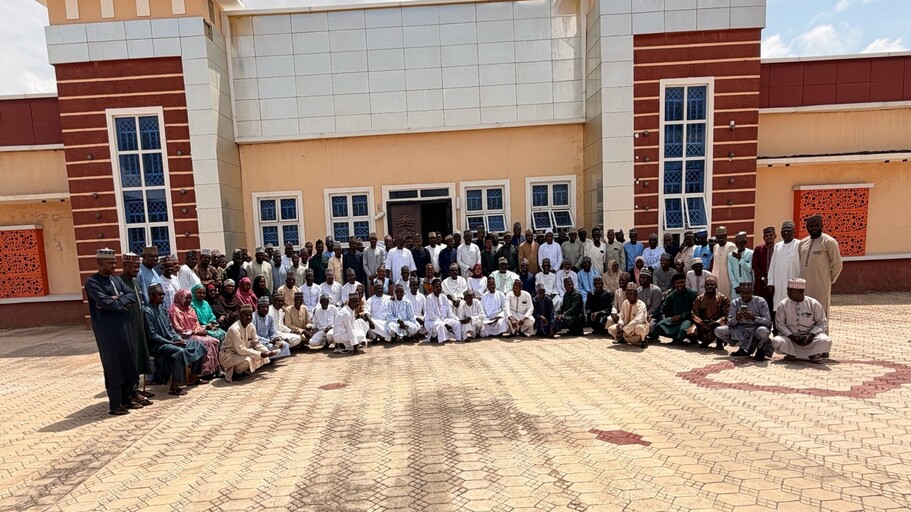
A stronger health supply chain begins with skilled people. To advance the availability of quality-assured medicines and health commodities across Kano State, the Kano State Ministry of Health and the Kano State Drugs and Medical Consumables Supply Agency (DMCSA), in collaboration with the Health Procurement Africa (HPA) Programme, Field Intelligence, and Capacity for Sustainable Development (C4SD), successfully conducted a five-day Integrated Supply Chain Training of Trainers (ToT) Workshop from 28 September to 2 October 2026 at Joclarif Hotel, Zaria, Kaduna State.
The workshop brought together 119 participants and facilitators, including Kano State in-state team members, warehouse officers, and Local Government Area (LGA) Essential Drug Officers. These participants have now been equipped to serve as trainers and mentors, supporting health facilities across all 44 LGAs of Kano State.
Why an Integrated Training Approach?
Primary healthcare facilities often operate with limited staff, yet those same personnel are frequently required to attend multiple programme-specific trainings that cover similar topics. This can divert valuable time away from patient care while creating duplication of effort.
The integrated training model was designed to address this challenge by consolidating the training plans of Gates Foundation supply chain partners operating in the state. Through a unified, programme-agnostic curriculum, the workshop aimed to optimise resources, strengthen learning outcomes, and create a sustainable approach to capacity building.
Workshop Objectives
The training focused on three key objectives:
- Develop skilled LGA-based trainers in core supply chain functions.
- Strengthen facility-level use of the Field Supply digital platform.
- Establish a sustainable cascade training and mentoring model across Kano State.
Strengthening Core Supply Chain Competencies
Facilitated by the Chartered Institute of Procurement and Supply through the Health Procurement Africa Programme and led by Technical Specialist for Nigeria, Pharm. Jimmy Aiden, the workshop provided participants with practical skills in forecasting and supply planning for health products at the facility level.
Using real-world health facility scenarios, participants learned and applied the four key forecasting methods:
- Consumption-based forecasting
- Service-based forecasting
- Demographic forecasting
- Morbidity forecasting
Working in groups, participants developed 12-month forecasts for selected commodities and translated these forecasts into supply plans aligned with available budgets. They also compared outputs generated using different forecasting methodologies, building a deeper understanding of quantification and decision-making processes.
Digital Innovation and End-to-End Supply Chain Management
Additional sessions delivered by C4SD and Field Intelligence focused on Kano State’s supply chain architecture and practical use of the Field Supply digital platform.
Topics covered included:
- Stock reporting and analytics
- Facility ordering processes
- Warehouse operations
- Route management
- Electronic proof of delivery
- Inventory visibility and data utilisation
The workshop concluded with an end-to-end supply chain simulation, trainer facilitation assessments, and state-level cascade planning exercises to prepare participants for implementation within their LGAs.
Creating Sustainable Impact
A key outcome of the workshop is the establishment of a locally driven cascade model. Rather than relying on external trainers, participants will return to the facilities they already supervise, providing on-the-job training and mentoring using facility records, stock cards, and consumption data.
This approach strengthens ownership, reduces costs, and ensures that newly acquired skills are embedded within routine health facility operations.
In the first phase of implementation, the trained facilitators will support capacity building across 528 health facilities throughout Kano State, followed by structured mentoring and supportive supervision.
Acknowledgements
Special appreciation goes to Pharm. Kamilu Mudi Salisu, Director of Pharmaceutical Services at the Kano State Ministry of Health; Pharm. Tukur Ibrahim, Technical Advisor to the Director General of DMCSA; Alhaji MD Bello, DRF Focal Person at the Kano State Primary Healthcare Management Board; and Pharm. Isah Labaran Uba, State LMCU Coordinator, for their leadership and commitment to strengthening public health supply chain systems.
Recognition is also due to the Health Procurement Africa Programme, C4SD, Field Intelligence, DMCSA, and the Kano State Ministry of Health for their collaboration in delivering a truly integrated and impactful training programme.
Looking Ahead
As participants begin cascading their knowledge across Kano State, the workshop marks an important step towards building a more resilient, data-driven, and sustainable health supply chain system. By investing in local capacity and strengthening last-mile supply chain practices, Kano State is positioning itself to ensure that essential medicines and health commodities consistently reach the communities that need them most.


What do you think?