
Institutionalising Supply Planning for Medical Countermeasures to Strengthen Emergency Preparedness and Response in Nigeria


Effective emergency response begins long before an outbreak, epidemic, or public health emergency occurs. It starts with ensuring that the right medical countermeasures (MCMs) are available in the right quantities, at the right locations, and at the right time.
Achieving this requires more than accurate forecasting. While forecasting helps determine how much of a product will be needed over a given period, supply planning translates that information into actionable procurement and supply chain decisions. It answers critical questions such as:
- How much should be procured?
- When should orders be placed?
- When must products arrive to avoid stockouts?
- What will the procurement cost?
- Is sufficient funding available to fulfil the planned orders?
By institutionalising supply planning, countries can move from reactive procurement towards strategic, data-driven decision making that improves preparedness, strengthens commodity security, and optimises available resources.
Building a Strategic Approach to Medical Countermeasures
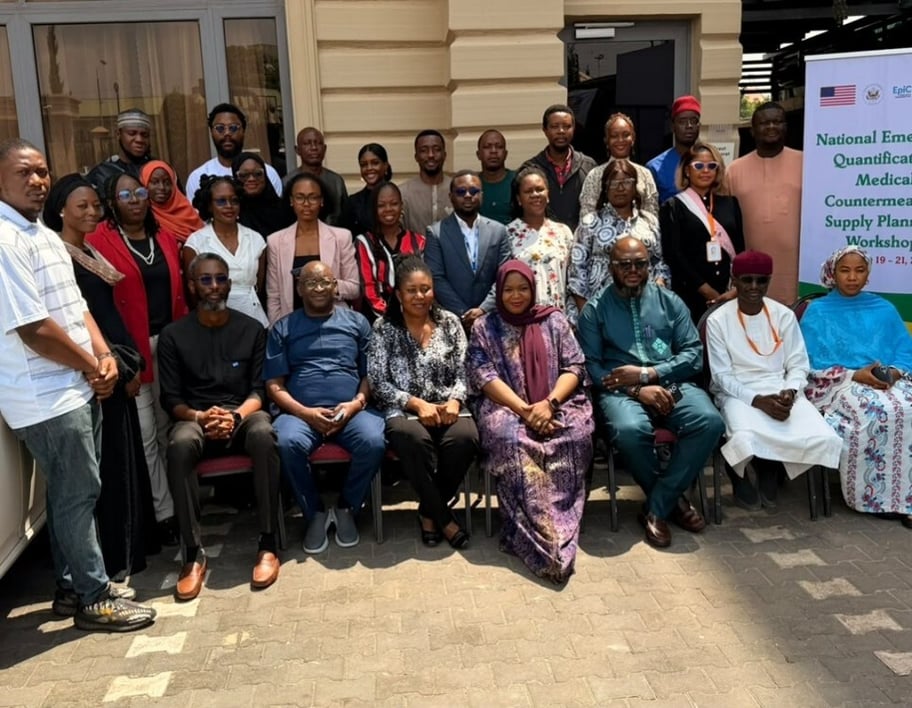
In October 2026, the Nigeria Centre for Disease Control and Prevention (NCDC), with support from the EpiC Project implemented by FHI 360 and technical assistance from the Health Procurement Africa (HPA) Programme implemented by CIPS, organised a three-day Supply Planning Workshop for Medical Countermeasures in Abuja.
Held from 19-21 October 2026 at the JohnWood Hotel, Abuja, the workshop was facilitated by HPA's Technical Specialist for Nigeria, Pharm. Jimmy Aiden, and Country Manager for Nigeria, Pharm. Irobodu Joseph Omokhapue.
The workshop formed part of a broader effort to strengthen Nigeria's national emergency preparedness and response systems by embedding structured supply planning processes into the management of strategic medical countermeasures.
From Forecasting to Actionable Supply Plans
The activity built upon a week-long assumptions-building and forecasting workshop conducted earlier in September 2026.
During the workshop, HPA supported NCDC in developing a comprehensive supply plan for priority tracer medical countermeasures using a mixed-method forecasting framework that combined:
- Risk calendar-based forecasting, which anticipates demand associated with seasonal disease patterns, outbreaks, and public health risks.
- Flat forecasting methodologies, which estimate routine and ongoing requirements based on stable consumption assumptions.
By integrating these approaches, participants were able to develop practical supply plans that inform procurement scheduling, stock positioning, replenishment decisions, and funding requirements to support Nigeria's National Emergency Preparedness and Response Programme.
Key Objectives of the Workshop
The workshop focused on five strategic objectives designed to improve commodity security and strengthen emergency response capability:
1. Translate Forecast Data into Supply Decisions
Participants converted consolidated forecasting data into actionable, time-phased delivery schedules to ensure uninterrupted product availability and prevent stockouts across national and subnational distribution points.
2. Quantify Resource Requirements and Funding Gaps
Product requirements were costed to determine total resource needs, compare those requirements against available funding, and identify critical commodity and financing gaps requiring stakeholder action.
3. Strengthen Evidence-Based Decision Making
The workshop evaluated and validated key planning assumptions, helping establish a robust, data-driven approach to ensuring sustainable commodity security for priority medical countermeasures.
4. Develop a Unified National Supply Planning Tool
A key outcome was the development of an advocacy and coordination tool capable of harmonising government procurement, donor contributions, funding streams, and product donations into a single national MCM supply plan.
This unified approach improves visibility, reduces duplication, and supports coordinated decision making across stakeholders.
5. Improve Regulatory and Importation Readiness
Participants reviewed critical regulatory and importation requirements, including:
- NAFDAC permits and licences
- Import documentation processes
- Customs and port clearance requirements
- Regulatory approval timelines
Addressing these factors within supply planning helps reduce procurement and clearance delays that could compromise emergency response efforts.
Collaboration Driving National Preparedness
The workshop brought together representatives from:
- Nigeria Centre for Disease Control and Prevention (NCDC)
- National Reference Laboratory
- World Health Organization (WHO)
- United States Centers for Disease Control and Prevention (US CDC)
- EpiC Project
- Other key public health and supply chain stakeholders
The diverse participation reinforced the importance of multi-stakeholder collaboration in building resilient health supply chains capable of responding rapidly to outbreaks and public health emergencies.
Driving Strategic Procurement Through Data
Special recognition goes to Pharm. Fatima Bukar, Head of Supply Chain at NCDC, and her team for their leadership and commitment to strengthening the country's quantification and supply planning processes for medical countermeasures.
By institutionalising supply planning and linking forecasting directly to procurement, funding, and logistics decisions, Nigeria is taking important steps towards a more resilient and responsive public health supply chain system.
At Health Procurement Africa, we are proud to support initiatives that enable governments and health institutions to use data for evidence-based procurement decisions. Through strengthened quantification, supply planning, and stakeholder coordination, we can optimise resources, reduce supply disruptions, and improve access to quality-assured health products when they are needed most.
Together, we are strengthening health security and advancing emergency preparedness through smarter, more strategic procurement.


What do you think?